AirWater Environmental provides EPA-protocol radon testing and AARST-compliant mitigation across the Capital Region. Upstate New York has some of the highest natural radon concentrations in the country — testing is the only way to know your level, and mitigation reliably reduces it to safe ranges. Free on-site consultation for testing or mitigation.
Why Radon Is a Problem in Upstate New York
Upstate NY sits on uranium-rich granite bedrock that releases radon — a colorless, odorless radioactive gas — as it decays. The gas enters homes through foundation cracks, sump pits, slab penetrations, and unsealed basement entry points, where it accumulates in lower levels.
The EPA identifies radon as the second-leading cause of lung cancer in the U.S., after smoking. The action threshold is 4.0 picocuries per liter (pCi/L), but the EPA recommends considering mitigation above 2.0 pCi/L because there is no "safe" level — risk scales linearly with exposure.
Capital Region testing data from the NYS Department of Health shows that more than a third of homes in some Upstate counties exceed 4.0 pCi/L. You cannot predict a home's radon level from the neighbor's reading, the year built, the foundation type, or how dry the basement looks. Testing is the only way to know.
Our Radon Testing Process
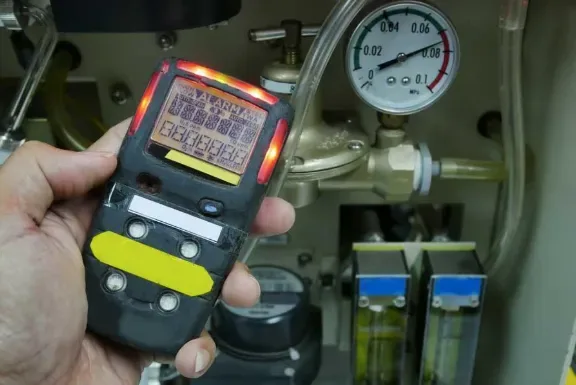
We deploy continuous radon monitors (CRMs) for short-term testing — typically a 48-hour minimum sampling period, with hourly readings recorded throughout. CRMs detect tampering (whether windows are opened during the test, whether the device is moved) and provide a defensible, real-estate-grade result.
For long-term testing, we use alpha-track detectors deployed for 90 days to a year, which average out seasonal variations. Long-term testing is generally more accurate for understanding your typical exposure but doesn't fit a real-estate transaction timeline.
Test results come with a full report including hourly readings, average concentration, temperature/humidity data, and a clear recommendation.
Sub-Slab Depressurization Mitigation
The standard mitigation approach for Capital Region homes is sub-slab depressurization (SSD) — a continuously-running fan that creates negative pressure under the basement slab, capturing radon before it enters the home and venting it safely above the roofline.
A typical SSD system installation includes: a 4" PVC suction pipe sealed into the slab, exterior or attic-routed venting to the roof, an inline radon fan, a manometer for ongoing performance monitoring, and sealing of foundation cracks and entry points. Most installations take a single day.
After installation, we re-test to confirm the system is performing — typically reducing readings from 8–20 pCi/L pre-mitigation to well below 2.0 pCi/L post-mitigation. The system is designed for 10+ years of continuous operation with only the fan needing eventual replacement.
Real Estate Radon Testing
AirWater Environmental performs real-estate-grade radon testing for home buyers, sellers, and listing agents across the Capital Region. We deploy CRMs that detect tampering, provide same-week results, and produce the documentation your transaction needs.
If a test comes back high, mitigation is straightforward to scope and quick to install — typically within 1–2 weeks of the estimate. We coordinate timing with closing dates and can provide credit-back documentation if the seller is funding the mitigation.
Frequently Asked Questions
Short-term tests require a minimum 48 hours of closed-house conditions. We typically deploy on day 1, retrieve on day 3, and deliver results within 24 hours of retrieval. Long-term tests run 90 days to a year.
A standard sub-slab depressurization system in the Capital Region typically runs $1,200–$2,200 depending on foundation type, fan location preferences (exterior vs. attic-routed), and home layout. Larger homes, multiple suction points, or interior-routed systems can run higher. Free on-site estimate.
Properly installed SSD systems are very quiet — the fan is rated below 50 dB and is typically located outside or in an unfinished utility area. You'll see a manometer reading on the suction pipe but you won't hear the system running.
New York does not require radon testing for home sales, but most buyers' agents include it as a standard inspection in Upstate NY due to the prevalence of high-radon homes. Sellers should consider proactive testing before listing to avoid late-stage transaction surprises.